
As part of Taster, its public testing ground for new ideas and interactive programming, the BBC has launched an experimental poetry game called Body Language. Users are invited to compose one of '125 possible variations' by selecting from poets' feet, torsos and heads – and then to rate the experience.
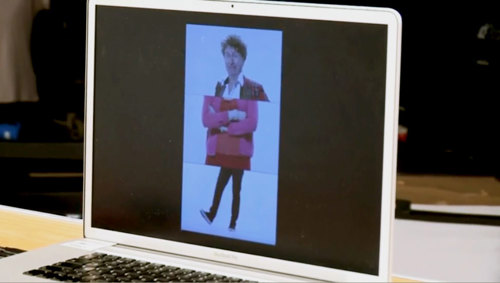
Though it's not just broadcasters who're experimenting with digital poetry, the BBC's experiment may be commendable for its accessibility. Given technology's rapid pace, many examples of interactive poetry on the web rely on outdated coding languages for their interactions – or weren't designed by professionally skilled designers – and thus age poorly. And memes like Google Poetics and @horse_ebooks bear witness to technology's ability to create cut-ups of us.
Of course, there's always that most time-honoured form of interactive poetry: magnetic poetry. That, too, lives online.
Our exploration of what stories our bodies can tell – also called Body/Language – takes place at the Malthouse Theatre this coming Monday night. It marks the first of our Subtexts series of talks, based on key themes from the 2015 Malthouse theatre program, and features speakers including Alice Pung, Kelli Jean Drinkwater, Karina Quinn and host Clementine Ford.